CALIFORNIA ADA COMPLIANCE GUIDE
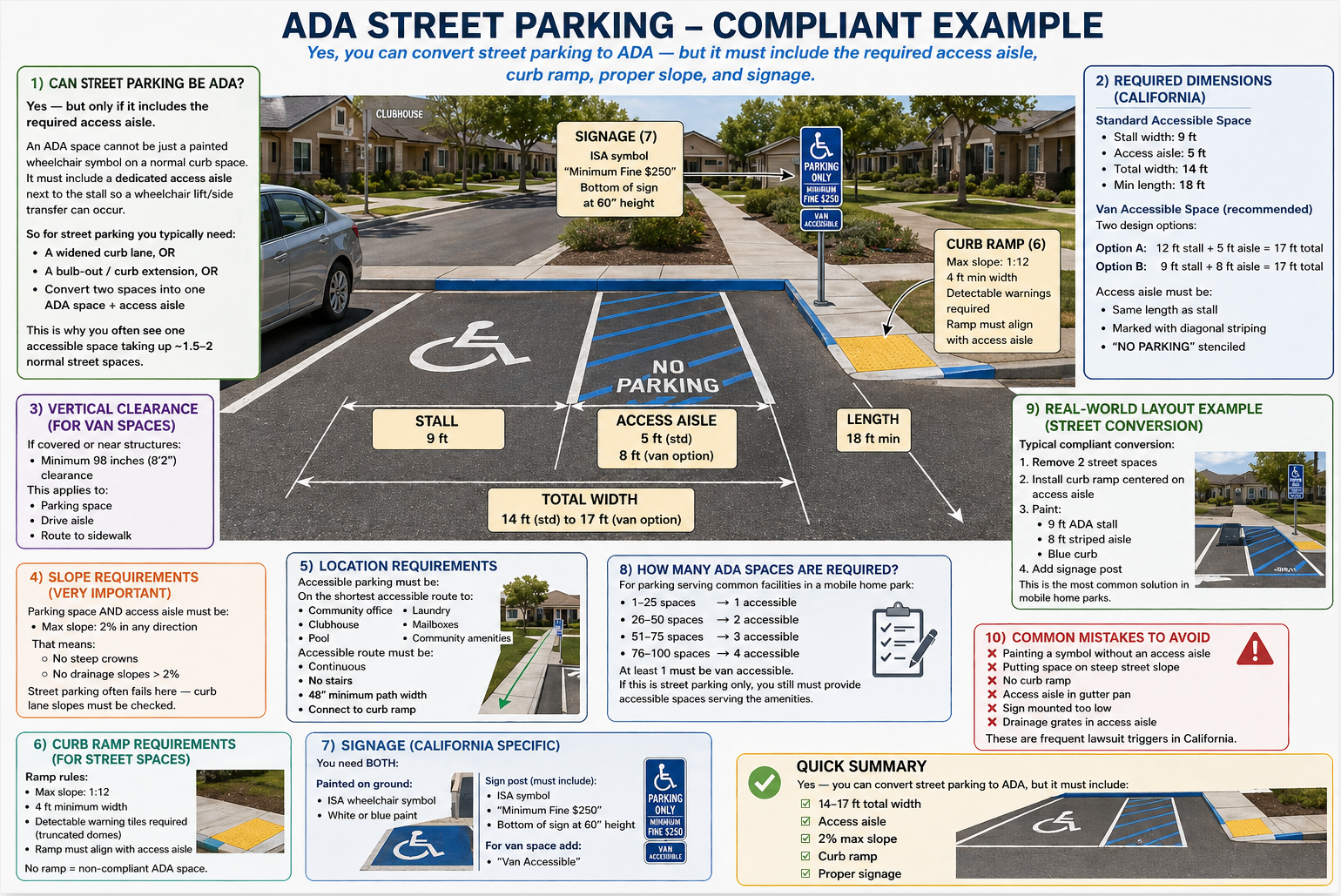
CAN STREET PARKING BE ADA COMPLIANT?
Yes, but only if it includes the required access aisle.
An ADA space
cannot be just a painted wheelchair symbol on a normal curb space.
It must include a
dedicated access aisle next to the stall so a wheelchair lift/side transfer can occur.
So for street parking you typically need:
- A widened curb lane, OR
- A bulb-out / curb extension, OR
- Convert two spaces into one ADA space + access aisle
This is why you often see one accessible space taking up ~1.5–2 normal street spaces.
Required Dimensions (California)
Standard Accessible Space
- Parking stall width: 9 ft
- Access aisle width: 5 ft
- Total width needed: 14 ft
- Minimum length: 18 ft
Van Accessible Space (recommended)
In residential communities, you almost always want at least one van space.
Two design options:
Option A:
- 12 ft stall + 5 ft aisle = 17 ft total
Option B:
- 9 ft stall + 8 ft aisle = 17 ft total
Access aisle must be:
- Same length as stall
- Marked with diagonal striping
- “NO PARKING” stenciled
Vertical Clearance (for van spaces)
If covered or near structures:
- Minimum 98 inches (8’2”) clearance
This applies to:
- Parking space
- Drive aisle
- Route to sidewalk
Slope Requirements (VERY IMPORTANT)
Most ADA violations in California are slope-related.
Parking space AND access aisle must be:
- Max slope: 2% in any direction
- That means:
- No steep crowns
- No drainage slopes > 2%
Street parking often fails here — curb lane slopes must be checked.
Location Requirements
Accessible parking must be:
On the shortest accessible route to -
- Community office
- Clubhouse
- Pool
- Laundry
- Mailboxes
- Community amenities
Accessible route must be:
- Continuous
- No stairs
- 48" minimum path width
- Connect to curb ramp
Curb Ramp Requirements (for street spaces)
If the space is along a curb, you must add a curb ramp.
Ramp rules:
- Max slope: 1:12
- 4 ft minimum width
- Detectable warning tiles required (truncated domes)
- Ramp must align with access aisle
No ramp = non-compliant ADA space.
Signage (California specific)
Painted on ground:
- ISA wheelchair symbol
- White or blue paint
Sign post:
Must include:
- ISA symbol
- "Minimum Fine $250"
- Bottom of sign at 60" height
For van space add:
- “Van Accessible”
How Many ADA Spaces are Required?
For parking serving common facilities in a mobile home park:
Typical rule of thumb:
- 1–25 spaces → 1 accessible
- 26–50 spaces → 2 accessible
- 51–75 spaces → 3 accessible
- 76–100 spaces → 4 accessible
At least 1 must be van accessible.
If this is street parking only, you still must provide accessible spaces serving the amenities.
Real-World Layout Example (street conversion)
Typical compliant conversion:
- Remove 2 street spaces
- Install curb ramp centered on access aisle
- Paint:
- 9 ft ADA stall
- 8 ft striped aisle
- Blue curb
- Add signage post
This is the most common solution in mobile home parks.
Common Mistakes to Avoid
- Painting a symbol without an access aisle
- Putting space on steep street slope
- No curb ramp
- Access aisle in gutter pan
- Sign mounted too low
- Drainage grates in access aisle
These are frequent lawsuit triggers in California.

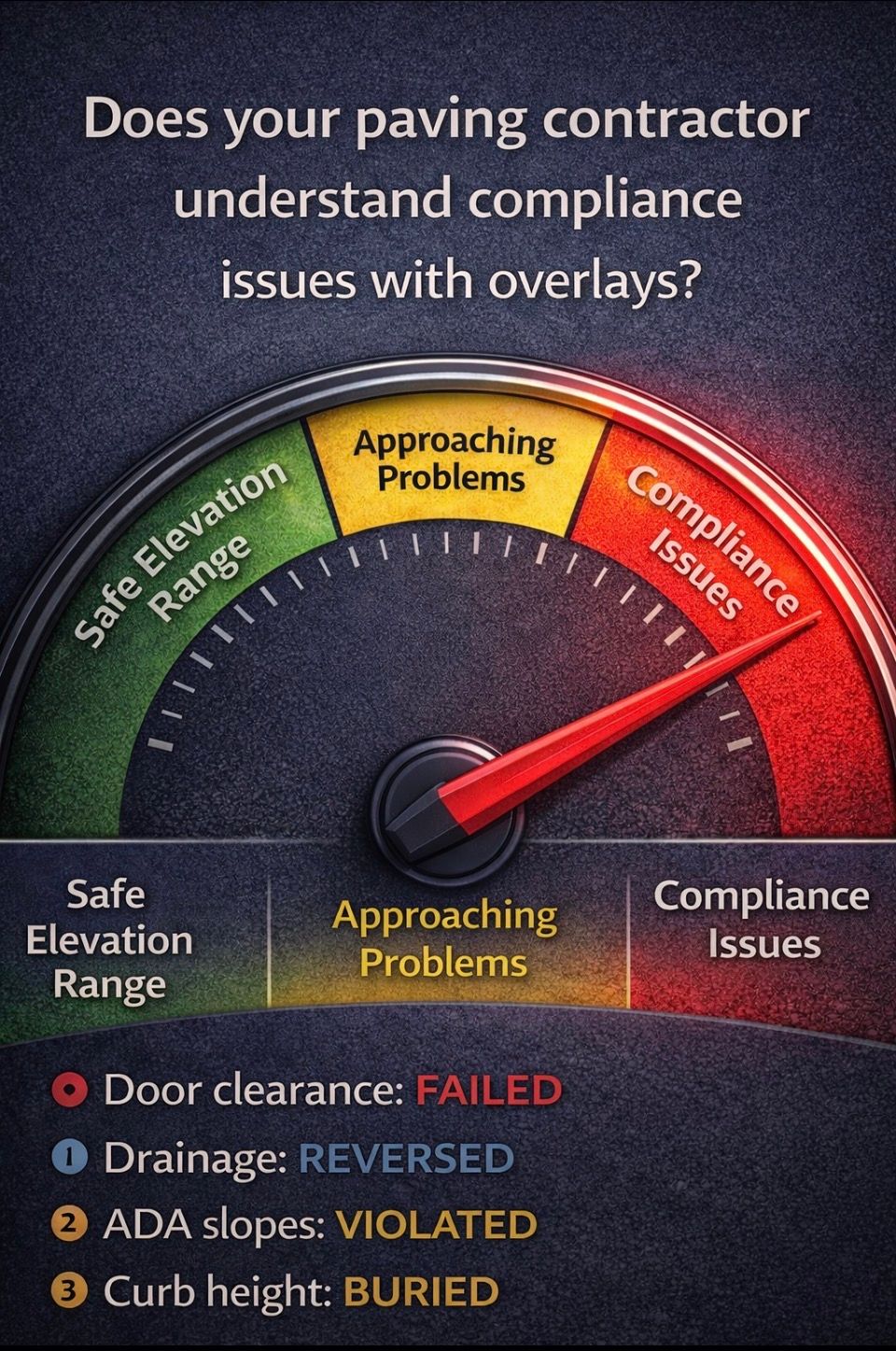
Does Your Contractor Understand ADA?
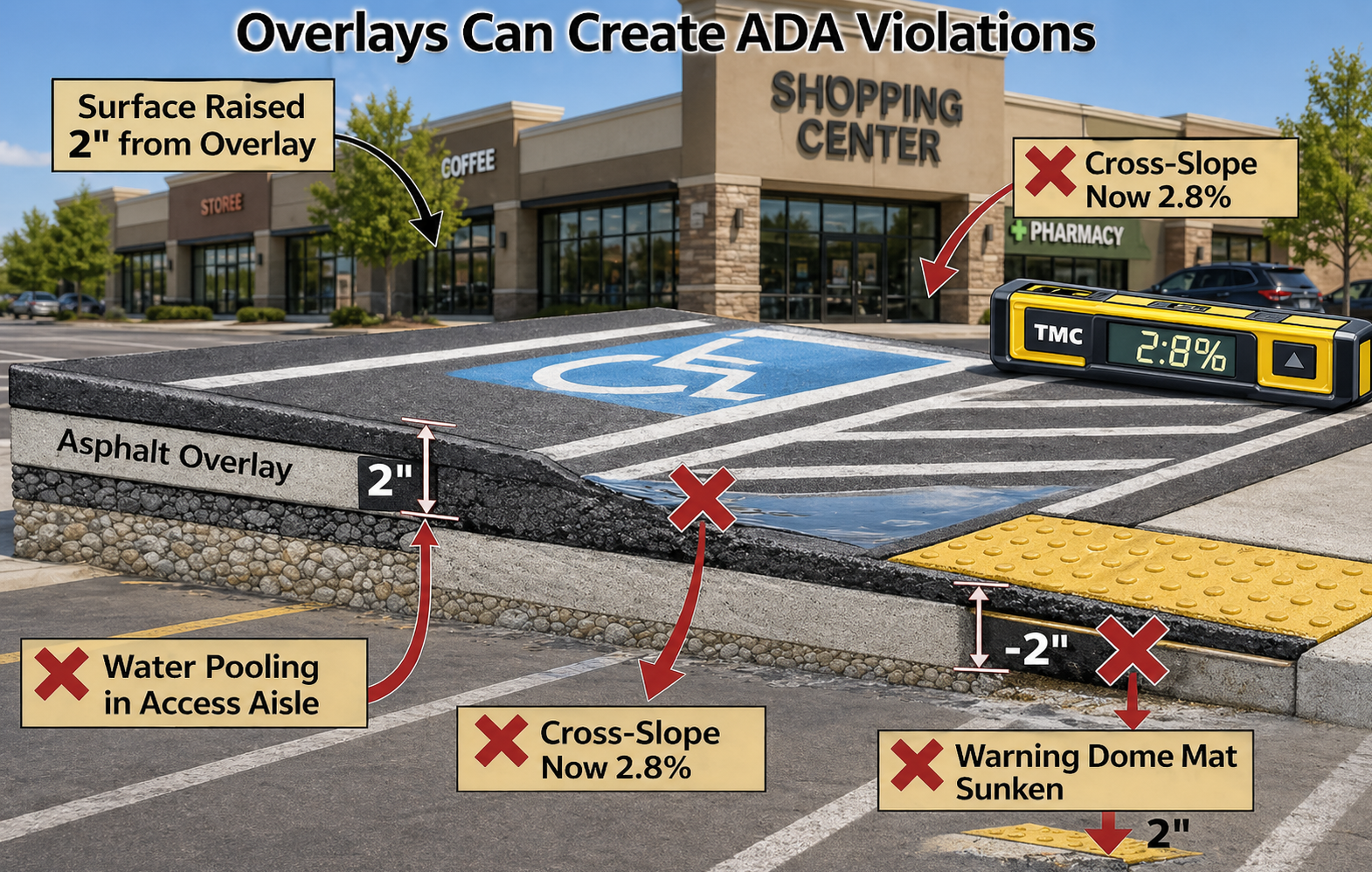
Most paving overlays seem simple… until they create compliance issues that can lead to expensive fixes and potential lawsuits.
When parking lots or street parking are resurfaced, small elevation changes can cause big ADA violations.
Here’s what we see all the time:
- Door clearances suddenly fail
- Drainage gets reversed and water pools
- ADA slopes exceed the 2% maximum
- Curbs and warning domes become buried
Street parking conversions are another major risk area. An ADA space is NOT just a painted wheelchair symbol.
To be compliant, street parking must include:
✔ Dedicated access aisle (5–8 ft wide)
✔ Proper curb ramp aligned to the aisle
✔ Max 2% slope in any direction
✔ Correct signage and striping
✔ 14–17 ft total width for the space
This is why one compliant ADA street space often takes the room of 1.5–2 standard spaces.
The biggest mistake property owners make?
Hiring a paving contractor who understands asphalt — but not ADA.
Fixing violations after the fact costs far more than doing it right the first time.
If you’re planning overlays, restriping, or converting street parking, make sure ADA compliance is part of the plan from day one.
California ADA Compliance Summary:
Yes — you can convert street parking to ADA, but it must include:
- 14–17 ft total width
- Access aisle
- 2% max slope
- Curb ramp
- Proper signage