Who is Responsible for Sidewalk Repair?
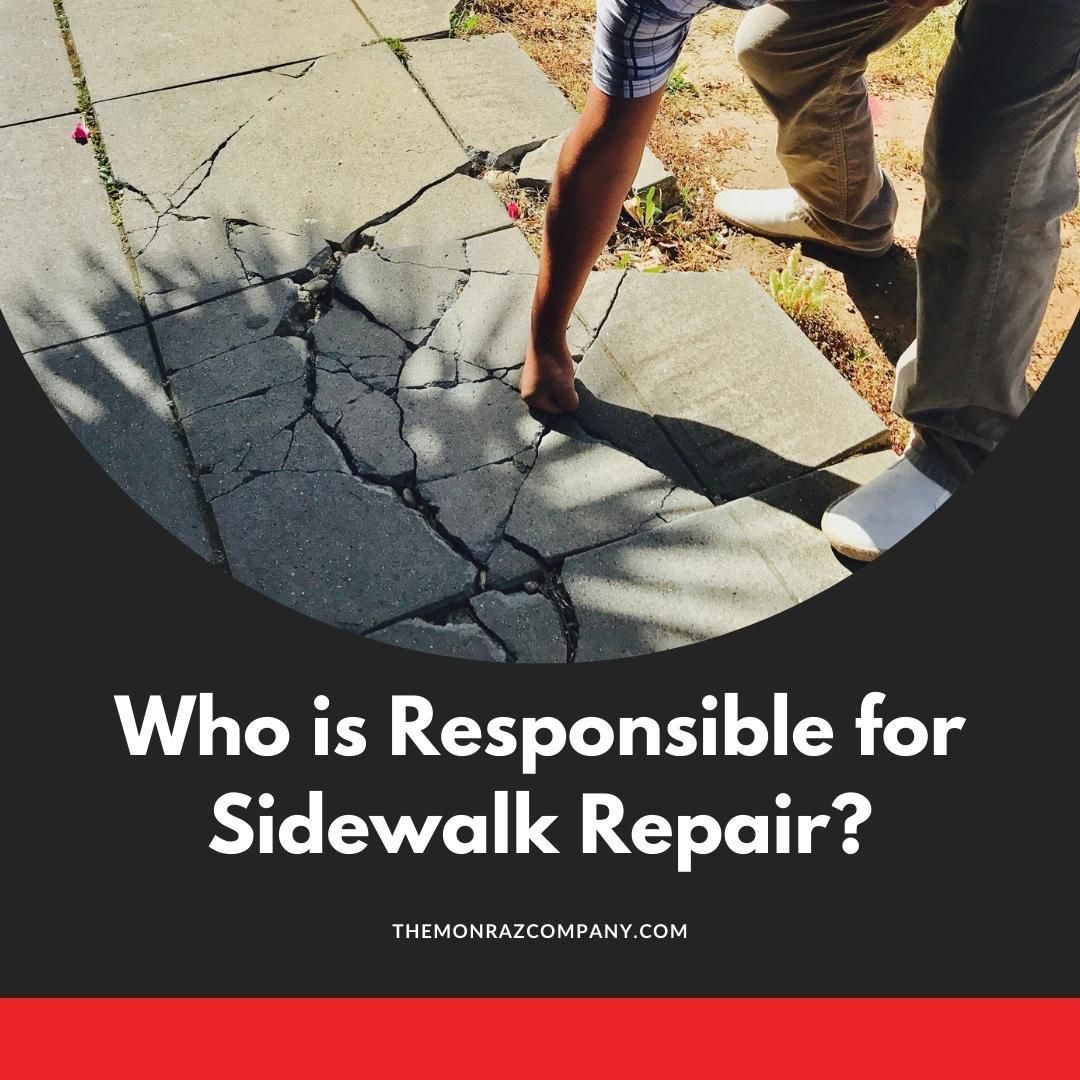
There are many reasons why a sidewalk may need repair. Damage could be caused by tree roots growing underneath and disrupting the concrete over time. Sidewalks are prone to cracking in extreme cold or hot weather. Debris, like acorns or gum, left on the sidewalk surface could cause tripping hazards as the materials penetrate into cracks over the winter. No matter the cause of a damaged section, the question then becomes–who do you call to discuss repairs?
Sidewalks see a lot of use from pedestrians, and after years of wear and tear, repairs are inevitable. Homeowners and business owners may find themselves needing to repair cracked, uplifted, or otherwise damaged sections of sidewalk. However, when a sidewalk repair is needed, it’s not always clear who is responsible to actually make the repairs!
Today’s post aims to provide clarity on who bears responsibility for sidewalk repairs in different scenarios. Whether addressing repairs needed for residential property sidewalks or public pedestrian corridors, understanding who is accountable helps homeowners and municipalities effectively care for this important infrastructure!
Let’s dive right in!
Who is Responsible for Sidewalk Repair?
In most municipalities, property owners are responsible for the sidewalk in front of their private properties. This includes homes and commercial spaces. This includes responsibilities like cleaning debris and shoveling snow in the winter. As well as making any repairs needed due to cracks, uplifting, or other issues with the concrete. However, property owners are not responsible for sidewalk repairs stemming from tree root damage or other naturally occurring issues coming from public property.
Public sidewalks located away from private properties, like those running down the middle of streets, are generally the responsibility of the local government to maintain. This includes tasks like performing sidewalk repairs as needed on public property.
In summary–private property owners are responsible for maintaining sidewalks directly in front of their properties. Alternatively municipal governments are responsible for public sidewalks not immediately adjacent to private land. There are some gray areas. So, it’s always smart to check local ordinances if there is any confusion over who is responsible for sidewalk repairs or maintenance in a given area.
For property owners needing to conduct repairs on broken sidewalk sections due to root damage, tree impacts, or general deterioration over time, proper techniques are crucial. When conducting sidewalk repairs like pouring concrete, following guidelines around factors that affect the pour process is important to allow the concrete to cure properly. Be sure to refer to our post on when you can pour concrete to ensure successful repairs!
Not sure where to start? Contact The Monraz Company today to request a free quote for your commercial or residential concrete construction project!
Is the City Responsible for Sidewalk Repair?
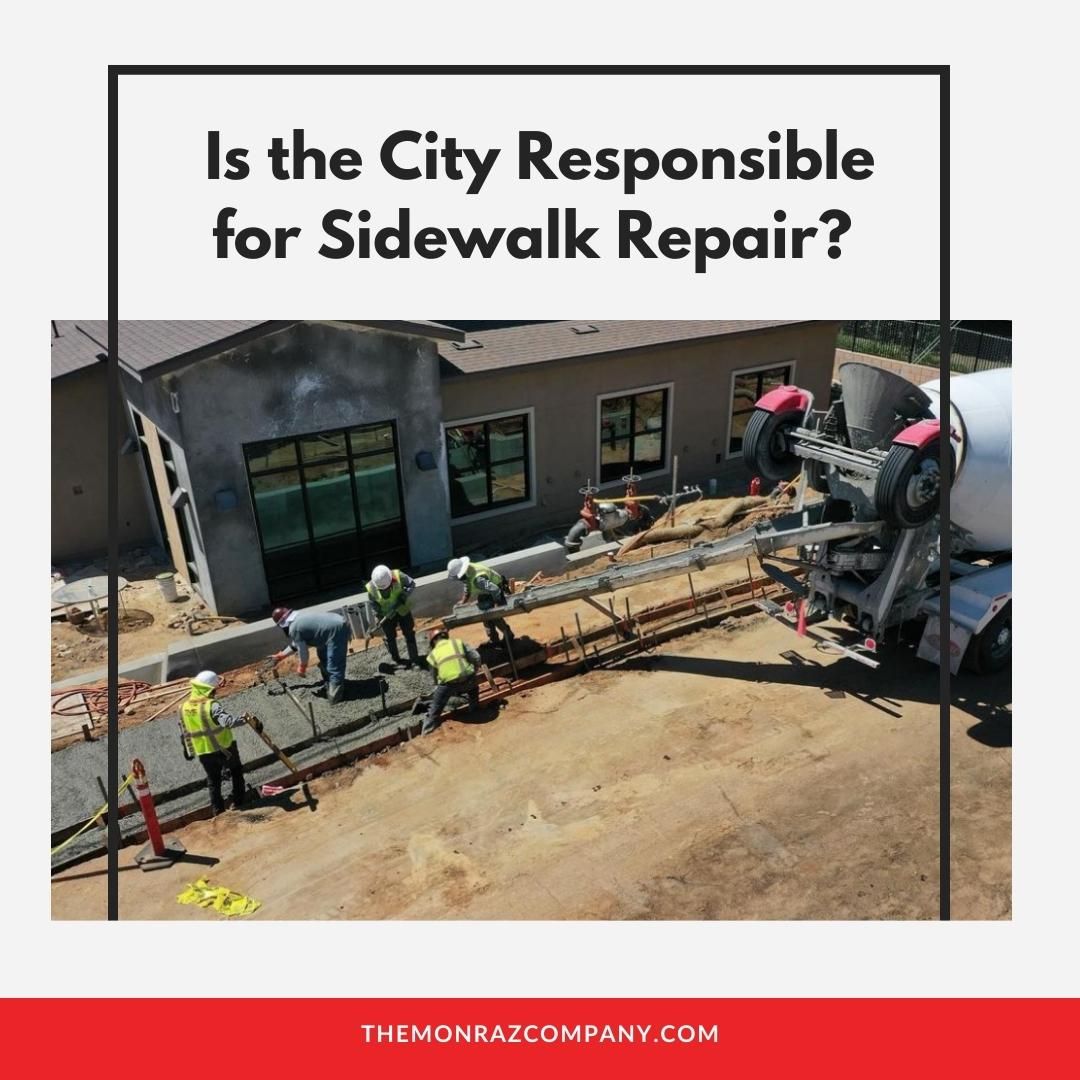
Like we mentioned earlier, in many cases cities are responsible for repairing sidewalks that are fully located on public property. This includes sidewalks that run down the center of streets rather than being directly adjacent to private homes or businesses. As these sidewalks are not tied to specific private land, cities take responsibility for their maintenance and any repairs required over time.
Cities may also have to address repairs needed for sidewalks damaged due to issues originating from public infrastructure or property. For example, if tree roots from a city-owned tree begin to uplift and crack a sidewalk slab, the municipality likely bears the cost to fix it. Similarly, sidewalks requiring repair due to problems with underground public utilities like failing curbs or sewer lines within the public right-of-way would be handled by the city.
In some jurisdictions, cities may assist homeowners with repair costs if a sidewalk. This is especially true if it was broken by infrastructure outside of the homeowner’s control. While generally responsible for sidewalks directly in front of private properties, cities recognize that some damage can stem from public assets. As such, some cost sharing for repairs may be available in qualified situations at the city’s discretion. Overall, publicly accessible sidewalks away from private land and those damaged by public property issues tend to fall under a city’s responsibility.
How Much Does it Cost to Repair a Sidewalk?
The cost to repair a section of damaged sidewalk can vary depending on the extent of work required, but homeowners and property owners can generally expect to pay between $50-$500 per square yard repaired. Small cracks or minor problems may be patched for $50-100, while full replacements of damaged areas are more involved. Completely removing and replacing a 3×4 foot section of sidewalk can cost $150-300 due to the labor and materials.
For very large repair jobs like replacing the entire sidewalk around a house, costs may reach $1,500-5,000 depending on the size of the area. Hiring a professional contractor, like The Monraz Company is typically recommended for code-compliant repairs, adding about 15-20% to the material costs. Overall, sidewalk repairs require an investment but preventing safety hazards and maintaining infrastructure values.
By understanding responsibilities for private versus public sidewalk maintenance and repairs, property owners and local governments can effectively manage sidewalks.
In conclusion, determining responsibility for sidewalk repairs depends primarily on whether the section in need of repair is located on public or private property. Property owners are usually responsible for maintaining the sidewalk directly in front of their home or business. Meanwhile, cities and municipalities are typically accountable for repairs on sidewalks in fully public areas like street right-of-ways.
There may be some shared responsibility in cases where damage stems from public infrastructure like trees or underground utilities. Overall, keeping sidewalks in safe, walkable condition is important both for pedestrians and community values. Following the guidelines discussed in this post can help clarify who to contact for potential repairs in different situations.
Don’t hesitate to reach out to your local public works department or to professional contractors like ourselves if you have any unresolved questions about sidewalk maintenance and repairs. Working together, homeowners, businesses and municipalities can properly care for this vital pedestrian infrastructure. And by understanding factors like when you can properly pour concrete, lasting repairs can be made to preserve access and livability for all.
As always, safety and quality are our top priorities at TMC Engineering. Stay tuned for more informative posts and exciting updates from our page . We also offer a wide range of services from asphalt paving to striping, sealing, crack filling , and concrete projects . Together, we can complete exceptional projects that stand the test of time!